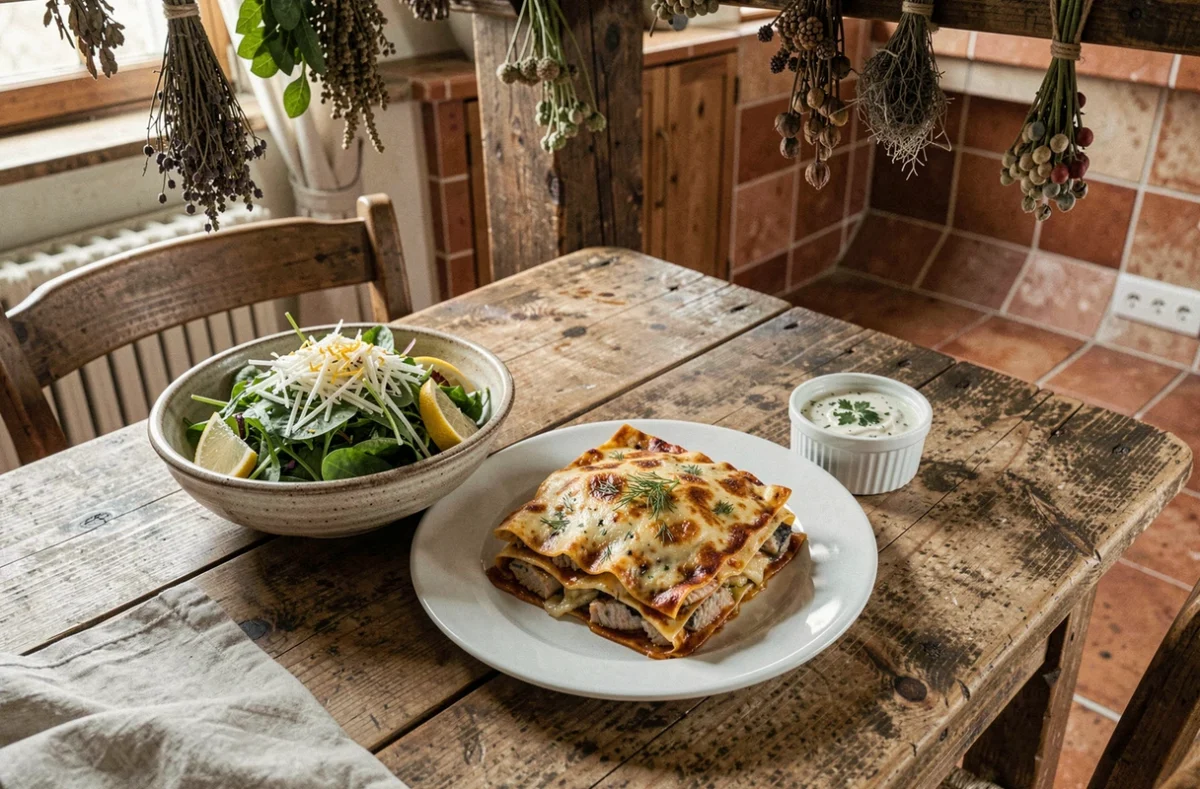
Fish lasagna already combines pasta, béchamel, and gratin cheese. Adding a starch on the side doubles the load without providing contrast. The choice of a side dish for this dish is less about decorative garnish and more about rebalancing: texture, acidity, and freshness must compensate for the richness of the whole.
Nutritional balance of a fish lasagna dish: what the composition requires
A serving of fish lasagna concentrates carbohydrates (pasta), fats (béchamel, cheese), and proteins (fish, sometimes eggs). Recent nutritional guidelines recommend prioritizing vegetables, whole grains, and plant-based fats while limiting very fatty preparations. Serving pilaf rice or gratin potatoes alongside replicates a pattern already present in the dish.
The role of the accompaniment is therefore corrective. It brings fiber, crunch, and an acidic or bitter note that contrasts with the melting texture of the lasagna. A herb salad, steamed green vegetables, or a fennel salad fulfill this role much better than a gratin dauphinois.
When looking for side dishes for fish lasagna, this logic of balance should guide every choice rather than the simple desire to fill the plate.
Adapting the garnish to the type of fish in your lasagna
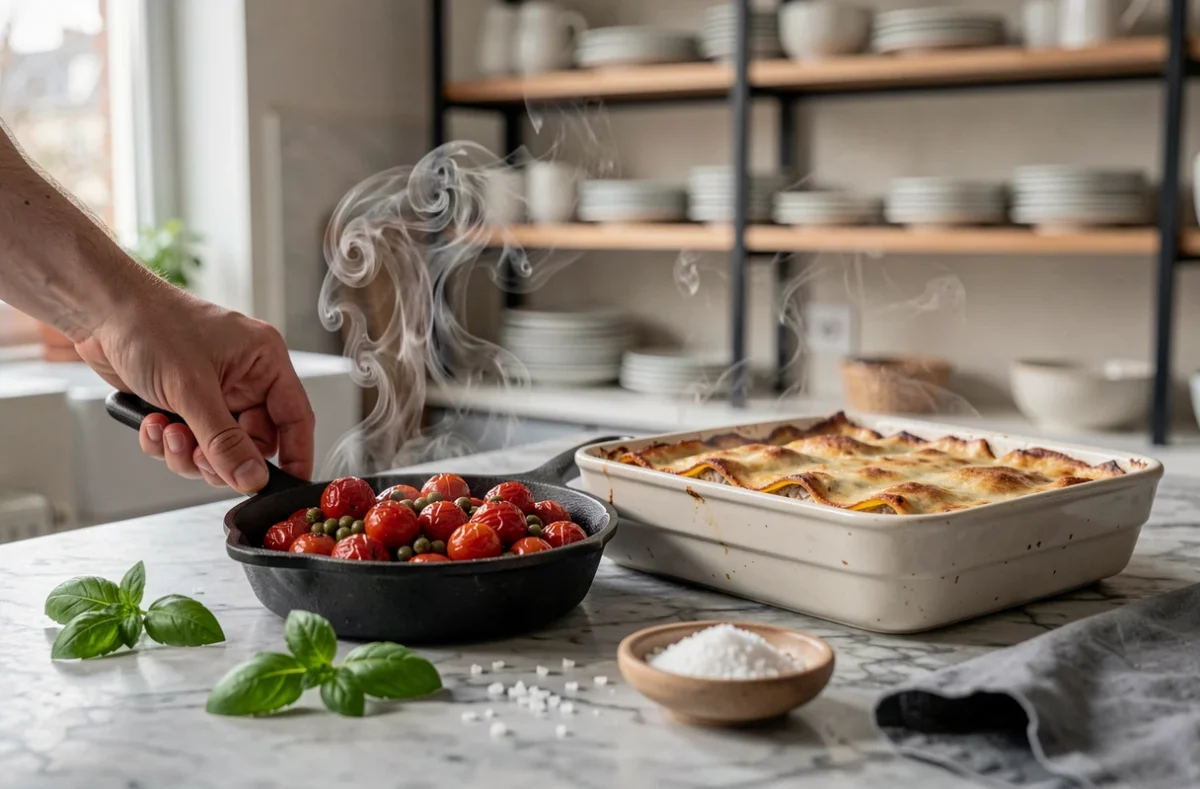
Not all fish require the same counterpoint. The difference in fat content between salmon and cod radically changes what works alongside.
Salmon lasagna: focus on acidity
Salmon, a fatty fish, makes the lasagna particularly rich. A tangy garnish helps cut this sensation. Thinly sliced raw fennel, lemony cucumber ribbons, or a green apple and celery salad bring this freshness. The acidity of citrus balances the fat of the salmon and refreshes the palate between bites.
Capers, finely chopped pickles, or a drizzle of white wine vinegar on crunchy vegetables serve the same purpose. The principle remains the same: oppose a bright note to a enveloping dish.
Cod or haddock lasagna: prioritize sweetness
These white fish, more delicate, do not pair well with an overly aggressive accompaniment in flavor. Mild and less bitter vegetables work better: barely sautéed zucchini, melting leeks, fresh peas, or light broccoli puree. The intensity of the accompaniment should match that of the fish, as the pairing principle of the Institute of Masters of Wine guide published in September 2026 reminds us.
A mint pea velouté, served warm in a small bowl next to the plate, provides a different texture without overpowering the flavor of the cod.
Roasted vegetables and fish lasagna: successful combinations
Green salad remains the classic reflex. It works, but it limits the meal to a cold/hot contrast without real taste contribution. Roasted vegetables open up a more interesting range, provided you choose less sweet varieties.
- Oven-roasted broccoli with a drizzle of lemon develops slightly grilled notes that harmonize with the gratin of the lasagna without competing.
- Cauliflower, cut into florets and roasted at high temperature, takes on a golden crust that adds a crunch absent from the main dish.
- Green asparagus, simply sautéed with garlic and finished with lemon juice, adds a welcome vegetal bitterness.
- Green beans, sautéed with a few slivered almonds, offer a clear textural contrast to the béchamel.
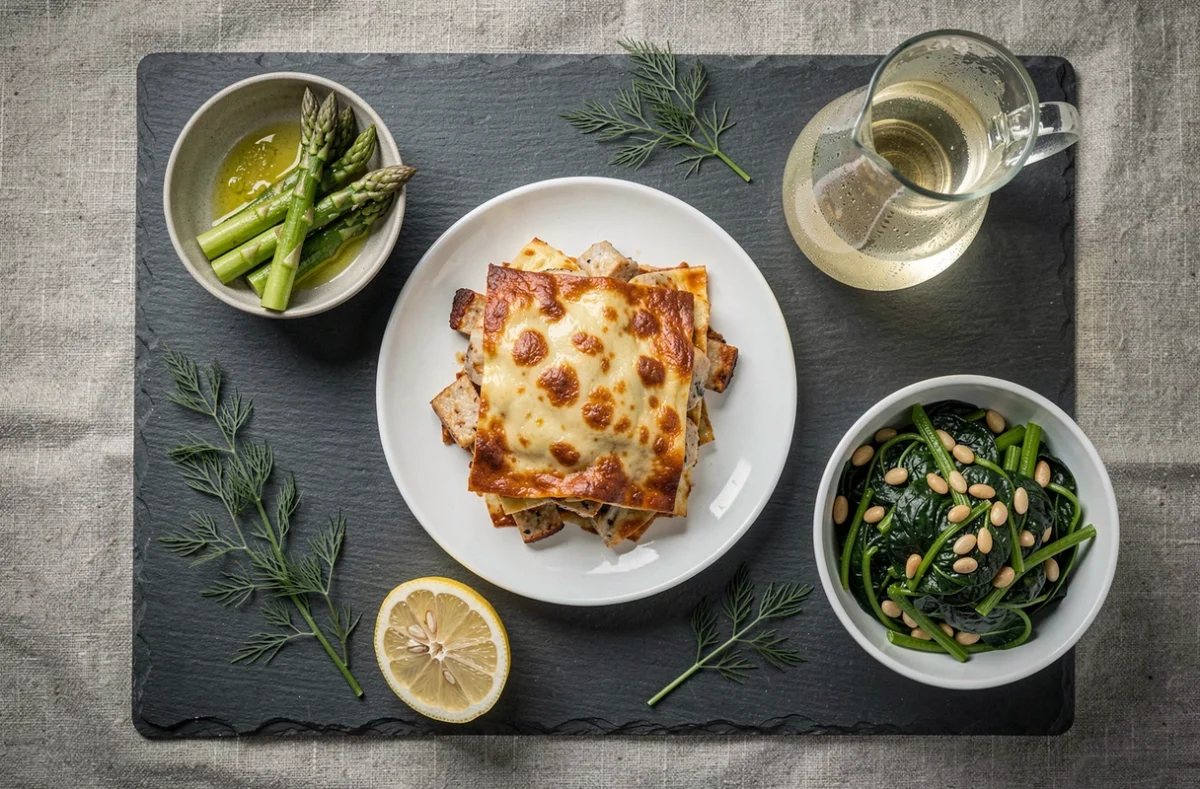
Less sweet roasted vegetables provide relief without reproducing the melting texture of the dish. On the other hand, roasted carrots or parsnips, very sweet once caramelized, can unbalance the whole by adding a sweetness that compounds with that of the béchamel rather than countering it.
Wine and sauce pairings to complete the meal
Dry white wine remains the most coherent choice with fish lasagna. A wine that is too oaky masks the finesse of the fish, while a bright and mineral white (like muscadet, entre-deux-mers, or chablis) prolongs the freshness that the accompaniment has begun to establish.
As for sauce, a lemon and olive oil vinaigrette is often sufficient to season the accompanying vegetables. Creamy sauces should be avoided: the béchamel of the lasagna already fulfills this role. It’s better to focus on occasional condiments.
- A rocket pesto lightened with parmesan, to add spiciness without weighing it down.
- A salsa verde made with flat-leaf parsley, capers, and anchovies, which enhances the marine dimension of the dish.
- A few drops of white balsamic vinegar on roasted cherry tomatoes, for a controlled sweet-sour touch.
These finishes allow for meal variation around the same fish lasagna recipe without altering the dish itself.
The final pitfall to avoid concerns bread. Serving garlic bread with lasagna triples the carbohydrates without providing contrast. If bread is necessary at the table, a piece of plain country bread, in small quantity, pairs better than an olive oil focaccia. The goal is not to deprive but to maintain a meal where each element plays a distinct role on the plate.