Turning on a tap, letting hot water run over your shoulders and soaping up under a steady stream: it seems like an everyday routine. Yet the shower as we know it today has only been around for about two centuries. Before then, entire civilizations invented, abandoned and reinvented ways to wash under a flow of water, with very different results from one era to the next.
Ancient Greece and the first water jets: showers before plumbing
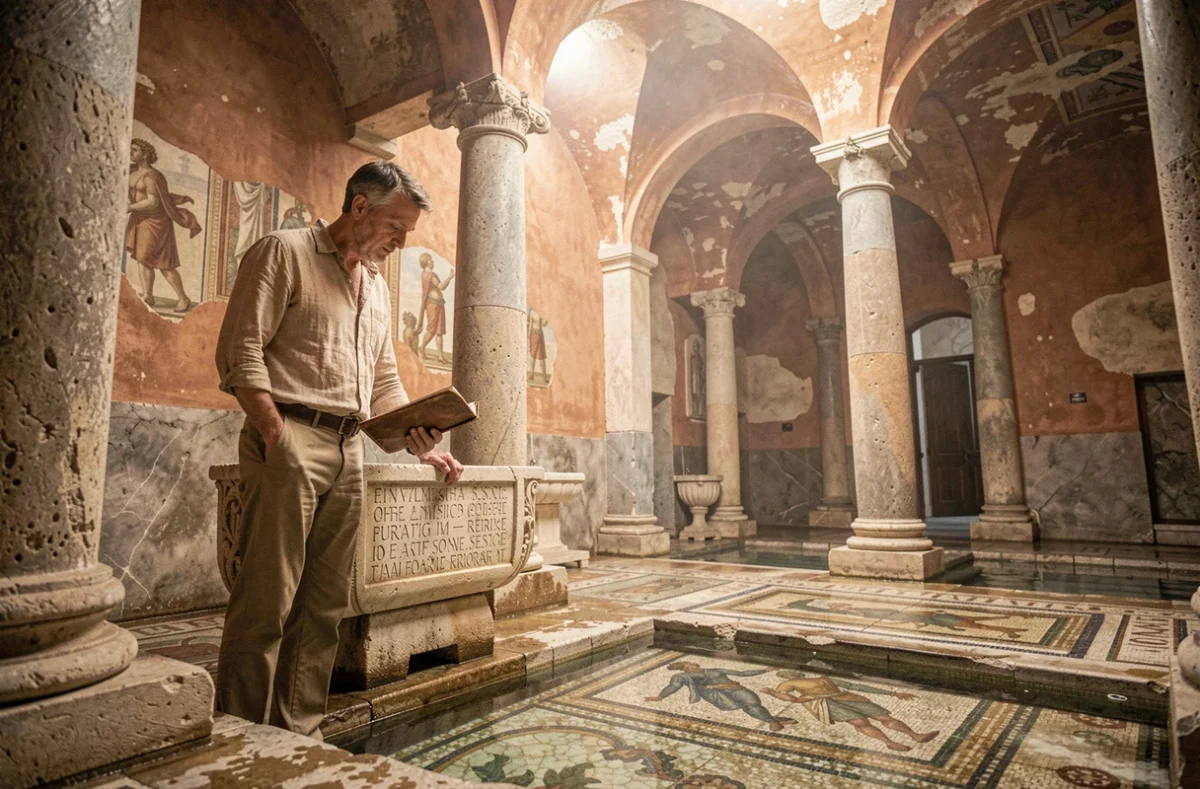
Competitors often talk about Roman baths and communal bathing. Less often mentioned is the Greek setup that came closest to a shower: raised basins pierced with small holes, supplied by lead or terracotta pipes and installed in gymnasiums. Depictions on pottery from the 5th century BCE show athletes standing beneath these jets, rinsing off after exercise.
This system was nothing like a modern shower. The water was neither heated nor pressurized. But the principle was the same: using a vertical stream of water to wash the body. The Greeks did not invent the individual bathtub; they saw communal rinsing as an extension of physical exercise.
Tracing the history of the shower and how it evolved shows just how long it took for this Greek athletic practice to become an everyday household ritual.
Middle Ages and Renaissance: why water disappeared from European hygiene
After the fall of the Roman Empire, water supply infrastructure deteriorated across much of Western Europe. Public baths initially survived, but gradually declined for both technical and cultural reasons.
Distrust of running water
In the Middle Ages, humoral medicine held that hot water opened the pores and left the body vulnerable to disease. Washing with plenty of water was seen as a health risk, not a form of care. Clean linen took the place of bathing: people changed their shirts rather than rinsing themselves.
The slow return of steam baths
Steam baths survived in some cities until the 16th century. They served as places for socializing as much as for hygiene. Their gradual closure, linked to outbreaks of plague and syphilis, further reduced Europeans’ contact with water.
This decline lasted nearly three centuries. Meanwhile, other cultures—hammams in the Maghreb and Japanese baths, for example—maintained regular washing practices without this break.
The mechanical shower in the 19th century: the invention that changed everything
Have you ever wondered what the first “modern” shower looked like? In France, the first mechanical showers appeared in medical and military settings, not in homes. Pump systems recycled water from the bottom to the top to create a continuous stream.
- Prisons and barracks were among the first places to install them, for efficiency: washing large numbers of people with little water and in little time.
- Spa facilities adopted showers as a therapeutic treatment, prescribed by doctors for rheumatism and skin conditions.
- Municipal bathhouses, which appeared in France in the late 19th century, made showers accessible to urban working-class people who had no running water at home.
The shower first caught on as a communal and medical facility, long before becoming an individual comfort. This helps explain why the bathtub retained its higher status in the domestic imagination for so long: it symbolized private luxury, while the shower brought barracks to mind.

From the postwar years to the contemporary bathroom: how the shower took over
Running water became widespread in French homes gradually over the course of the 20th century. For a long time, having a private bathroom remained a privilege. Municipal bathhouses continued to operate in many cities until the 1960s and 1970s.
The shift to individual showers
Several factors accelerated the adoption of showers over bathtubs:
- Smaller urban homes made shower enclosures more practical, as they take up less space than a bathtub.
- Growing awareness of water consumption played an increasingly important role: a short shower uses significantly less water than a bath, provided you do not let the water run for too long.
- Changing lifestyles—work schedules, single-parent families and commutes—made a quick shower better suited to everyday life than a bath.
Water savings and new fixtures
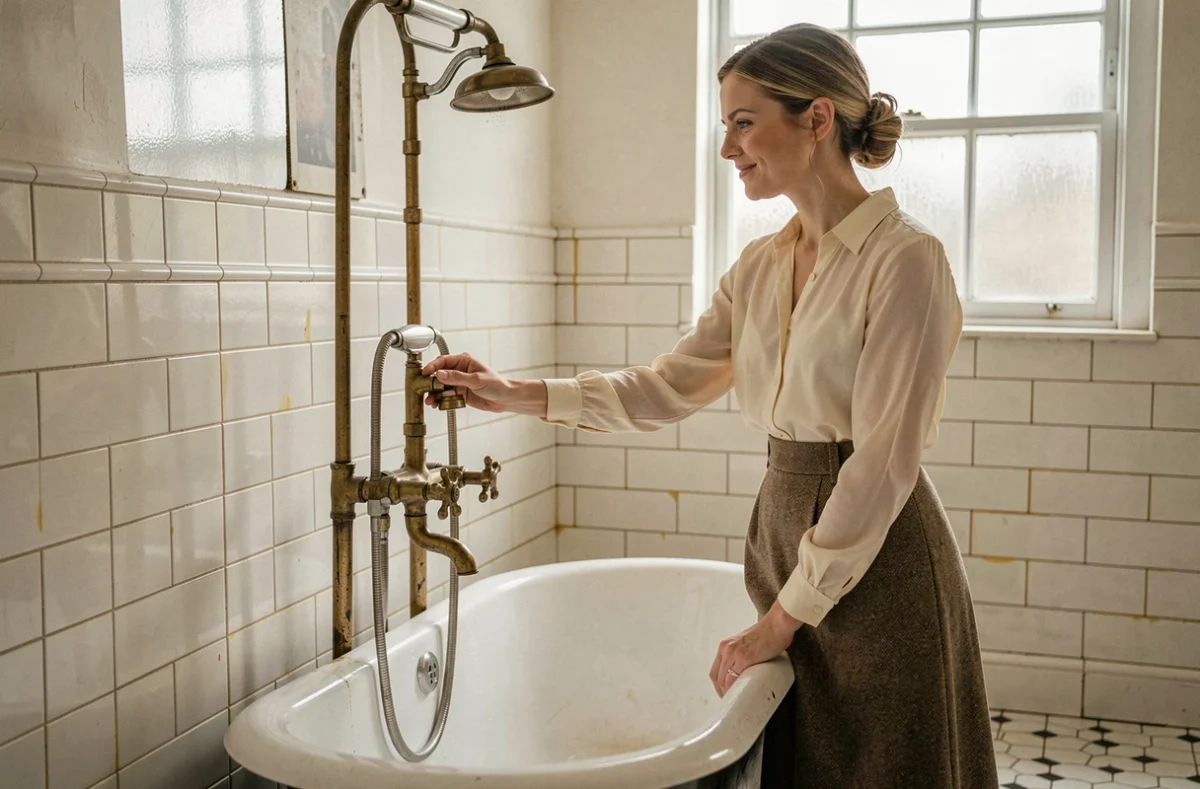
Low-flow showerheads are now promoted as a way to save water compared with conventional showerheads. The principle is simple: reduce the volume of water used per minute without diminishing the sensation of pressure, by mixing air with water or using calibrated openings.
How long you shower matters just as much as the showerhead’s flow rate. A ten-minute shower with standard equipment can use as much water as a bath. The fixture alone is not enough; behavior is what makes the difference.
Some manufacturers are developing water-recycling shower systems that filter and reuse water in a continuous loop while you shower. These systems are still uncommon in France, but they point to a technical direction: reducing consumption without sacrificing the comfort of the water stream.
It took the shower more than two millennia to make its way from Greek gymnasiums to contemporary bathrooms. Its journey was anything but straightforward: centuries of decline in Europe, a return through barracks and hospitals, and then a belated adoption in the home. What feels most natural in our daily lives is actually the result of a long detour through medicine, urban planning and water resource constraints.