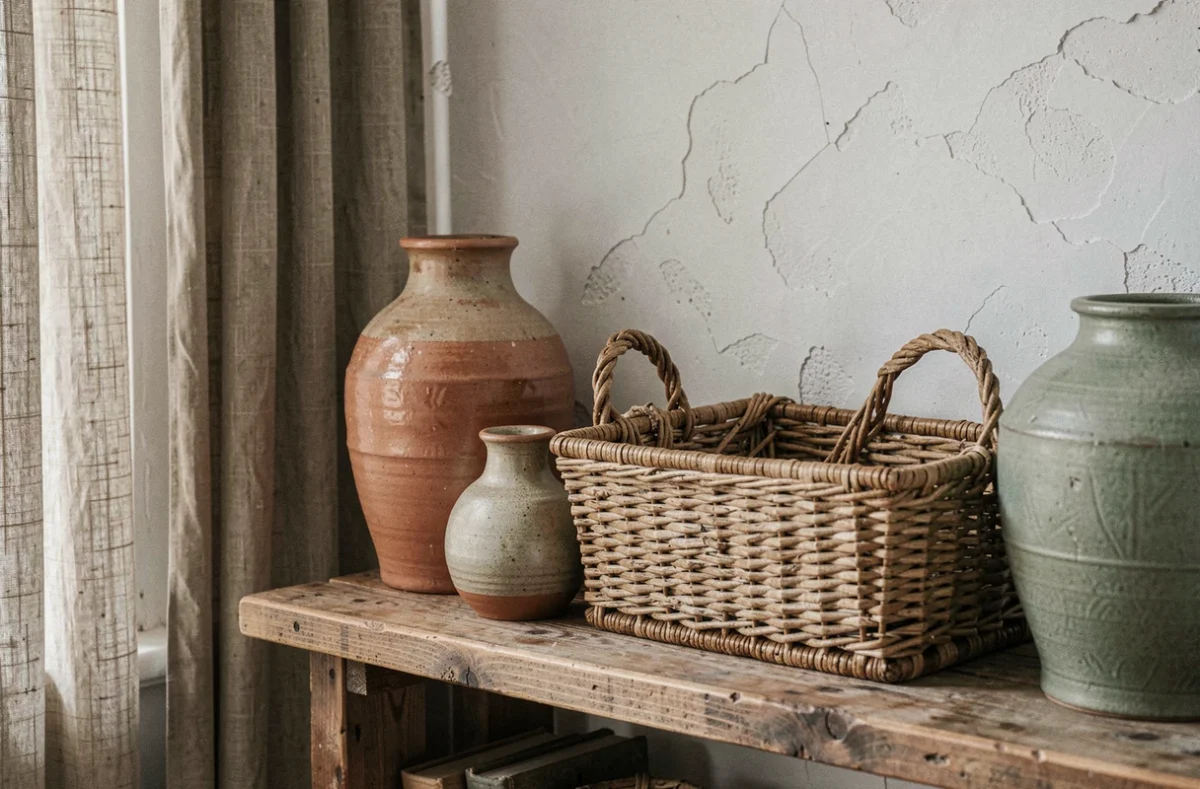
Handcrafted decor involves a trade-off between material, finish, and durability that determines the coherence of an authentic interior over the long term. Behind each piece lies a series of technical choices that affect the visual outcome and longevity. Understanding these parameters helps avoid style mistakes and poorly calibrated purchases.
Handcrafted finishes and manufacturing tolerances: what distinguishes a piece of durable decor
A handcrafted object is characterized by accepted dimensional and chromatic variations. On a hand-turned ceramic piece, the wall thickness fluctuates, the glaze reacts differently depending on the firing zone, and two pieces from the same workshop will never be perfectly identical.
These discrepancies are not defects. They indicate a shaping without industrial molds, where the potter’s hand imparts a unique tension to each curve. In comparison, an injection-molded piece exhibits a regularity that immediately betrays its origin.
On wood, the question of finishes is even more technical. A hand-waxed solid oak piece develops a patina that industrial polyurethane varnish cannot replicate. Wax penetrates the fibers and nourishes the wood, while varnish forms a waterproof film that eventually chips away.
Systematically checking the type of finish before acquiring a handcrafted wooden piece remains the most useful precaution: hard oil, beeswax, or natural lacquer each offer very different appearances and lifespans.
The opportunity to discover decor with Cœur Artisan allows for a confrontation of these manufacturing criteria on pieces selected by sector.
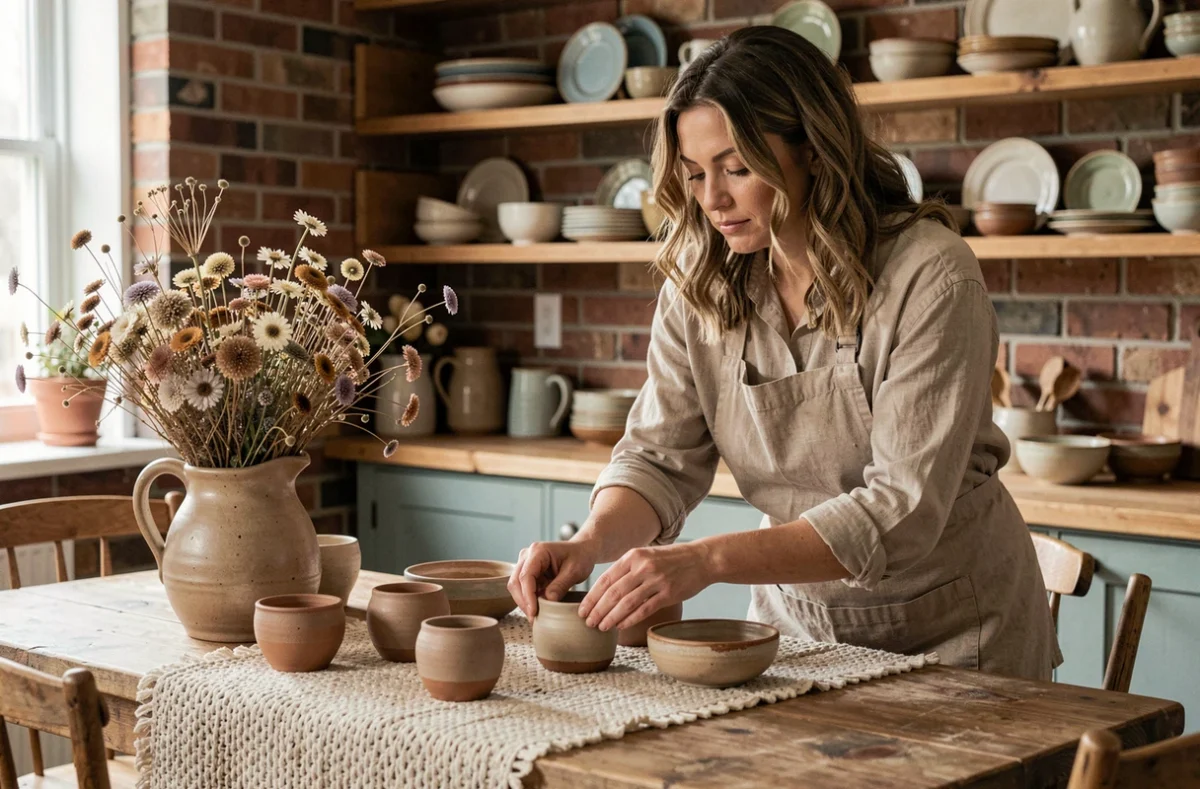
Natural materials in handcrafted decoration: stoneware, linen, and raw wood from a technical perspective
The choice of material determines longevity, maintenance, and integration into a given space. The three most common families in authentic handcrafted decoration deserve separate examination.
Stoneware and high-temperature terracotta
Stoneware fired above 1200 °C acquires almost zero porosity, making it resistant to stains and frost. Low-temperature terracotta, on the other hand, remains porous and requires a waterproof treatment. For use in damp rooms, stoneware is the only viable choice without recurring maintenance.
Linen and handwoven textiles
Untreated linen retains its thermoregulating properties as long as it does not undergo chemical finishing. Some upholstery textiles receive stain treatments based on PFAS (per- and polyfluoroalkyl substances), which French regulations are progressively regulating. Favoring raw or naturally dyed fabrics eliminates this risk.
Raw wood and reclaimed wood
The reuse of furniture serves as a concrete complement to new handcrafted purchases. The French extended producer responsibility scheme for furniture elements now structures the collection and re-circulation of existing pieces. A reclaimed elm table top, sanded and oiled by a cabinetmaker, offers a grain density and patina that no new wood can replicate.
- High-temperature stoneware requires neither varnish nor surface treatment for daily indoor use
- Raw linen, without PFAS finishing, washes at low temperatures and becomes more flexible over time
- Reclaimed wood must be checked (absence of old treatments with CCA or lindane) before any decorative reuse
Wabi-sabi style and authentic decoration: applying imperfection without falling into pastiche
Wabi-sabi has become a clichéd marketing term. In its technical dimension, it refers to an acceptance of signs of use and the aging of materials as an integral part of an object’s aesthetic.
Applying this approach to an interior requires selecting pieces whose material evolves over time. A stoneware bowl whose cracked glaze gradually stains with tea illustrates this principle. In contrast, an artificially aged object from a factory (deliberately chipped paint, fake rust marks) falls into pastiche.
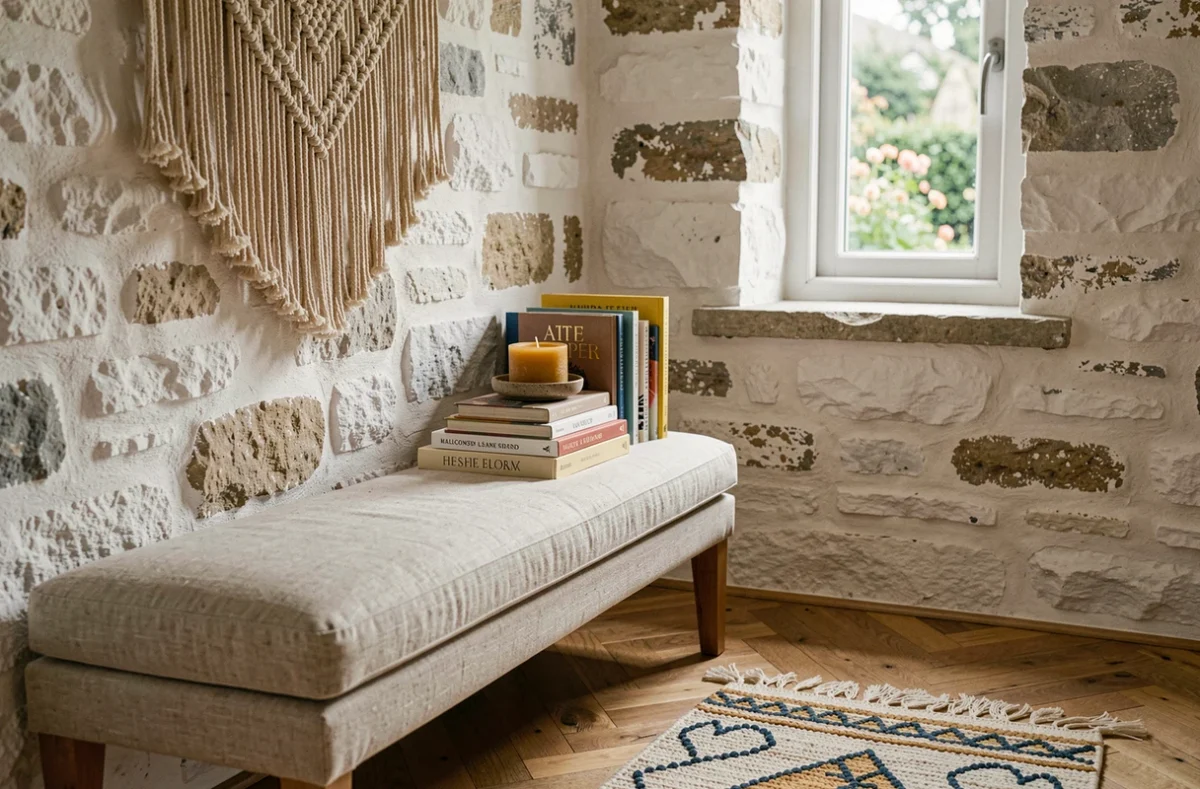
The sorting criterion is simple: a wabi-sabi object ages, a faux-vintage object deteriorates. The former gains character, while the latter loses quality. This distinction guides the choice between an authentic raku pottery piece and its tinted resin copy.
To integrate this aesthetic into a space without creating a museum-like decor, the rule of proportion remains effective: limit visible handcrafted objects to three or four per space, varying the materials. A stoneware vase, a wrinkled linen textile, and a forged metal light fixture are enough to set an atmosphere without overwhelming the eye.
European regulation and handcrafted decor: what the ESPR regulation changes for indoor objects
The European regulation on the eco-design of sustainable products (ESPR), which came into effect on July 18, 2024, gradually modifies the criteria applicable to decoration and furniture products. This text establishes requirements concerning the repairability, reusability, and recyclability of objects placed on the European market.
The European work plan 2025-2030 prioritizes textiles and furniture among the development of new rules. Handcrafted pieces, by nature repairable and made from identifiable materials, are well-positioned against these future requirements.
This regulatory framework does not yet apply to all categories of decoration. However, it clearly directs the market towards products whose lifespan and material traceability become selection arguments, beyond mere aesthetics.
- ESPR ultimately provides for a digital passport for certain categories of products, allowing verification of the origin of materials and manufacturing conditions
- Interior textiles are among the first sectors targeted by European technical work
- Artisans working with raw and traceable materials (local wood, regional stoneware, European linen) already meet the principles of the regulation without major adaptation
Purchasing an authentic handcrafted piece is not a trivial decorative gesture. It is a technical trade-off between material, finish, and durability, in a regulatory context that increasingly values the longevity of objects. Better to have three well-chosen pieces than an accumulation of objects whose composition is unknown.