
Renovating a house to improve its energy performance often requires a significant investment. In France, several public schemes help reduce the costs, but their scope is regularly changing. The recent focus of MaPrimeRénov’ on energy-inefficient homes, the minimum age requirement for the property, and the possibility of combining different funding sources create a landscape where each homeowner must devise their own financing plan.
Property age and energy classification: two filters that eliminate before the application
Before considering the amounts, a structural condition often goes unnoticed. The MaPrimeRénov’ aid outside of co-ownerships applies to properties built at least 15 years ago and occupied as a primary residence. A homeowner who has purchased a recent property, even if it is energy-intensive, may find themselves excluded from the scheme regardless of their income.
The energy classification is the second filter. The “major renovation” pathway of MaPrimeRénov’ now targets properties classified as E, F, or G. Properties classified as D are excluded from this scheme, even if the owner plans significant work. This tightening directs public spending towards the most energy-consuming homes but leaves out part of the housing stock.
Checking these two criteria in advance avoids engaging a consultant or a study office for an application that will be rejected. In practice, consulting the Subventions Bâtiment aids allows for a quick mapping of the schemes compatible with the specific situation of a property.
MaPrimeRénov’ major renovation: what the funding actually covers
For eligible properties, MaPrimeRénov’ finances up to 80% of a cap of 40,000 euros as part of a major renovation. The stated goal is a minimum gain of two classes on the energy performance diagnosis (DPE).
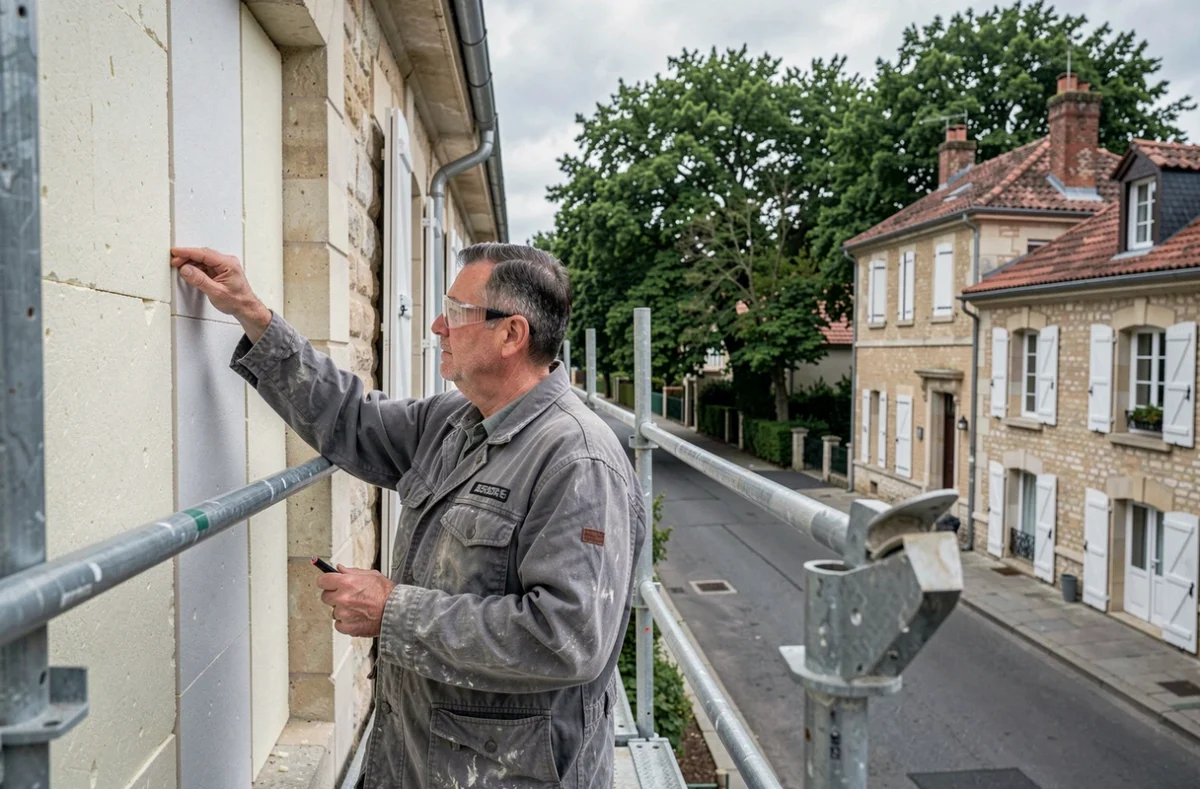
In practice, a major renovation combines several aspects: wall insulation, roof renovation, replacement of the heating system. The funding does not cover an isolated action but a coherent package of work. This approach encourages thinking about the project as a whole rather than in successive stages.
The pathway imposes two distinct administrative obligations. A preliminary appointment with a France Rénov’ advisor is required from the start of the project. Then, a Renovation Guide follows the project from start to finish. These steps extend the timeline but secure the technical sizing of the work.
The remaining costs, a critical variable for low-income households
Even with a high coverage rate, the remaining costs can amount to several thousand euros. Energy poverty has worsened in 2024, against a backdrop of the gradual withdrawal of exceptional support measures. For households with the lowest incomes, assessing the remaining costs before starting work determines the real feasibility of the project.
Combining eco-PTZ, CEE, and local aids: building a financing plan when MaPrimeRénov’ is inaccessible
The recent focus of MaPrimeRénov’ on energy-inefficient homes does not eliminate other levers. Thinking in terms of a global financing plan, rather than relying on a single grant, opens up real maneuvering room.
- The zero-interest eco-loan (éco-PTZ) finances energy renovation work without interest. It remains accessible for properties classified as D and can complement or replace MaPrimeRénov’ depending on the case.
- Energy savings certificates (CEE) are provided by energy suppliers. Their amount varies according to the type of work and geographical area, and they can be combined with other schemes.
- Some local authorities offer additional aids, sometimes subject to income conditions, sometimes linked to local objectives for rehabilitating the old housing stock.
- The “Coup de pouce chauffage” bonus targets the replacement of an oil or gas boiler with a more efficient system. Its amount depends on the household’s income profile.
The combination of these schemes can cover a significant portion of the total cost. However, the administrative procedures multiply, and each aid has its own eligibility criteria and processing times.
Beware of often-overlooked tax benefits
Some work qualifies for a reduced VAT rate, applied directly by the craftsman on the invoice. This mechanism does not require a specific file but assumes that the company is RGE (Recognized Guarantor of the Environment) certified. Verifying this certification before signing a quote is essential for accessing almost all public aids.
Real savings after work: what simulators do not always show
Online simulators estimate energy savings based on theoretical data: surface area, climate zone, type of equipment. These projections assume standard use of the property and implementation conditions that comply with recommendations.
On the ground, feedback varies. The gap between calculated performance and measured performance depends on the quality of insulation installation, the actual airtightness of the building, and the heating habits of the occupants. A gain of two DPE classes does not guarantee a halving of the energy bill.
To objectify the expected savings, comparing the annual energy cost before and after work remains the most reliable method, provided there are at least two years of consumption records. Households that keep their detailed bills are better equipped to negotiate a realistic financing plan.

The choice between a major renovation and targeted actions (replacement of heating only, partial insulation) depends as much on the available budget as on the initial condition of the building. A prior energy audit remains the best tool to arbitrate between these two approaches, identifying the areas where the return on investment will be the quickest.
The complexity of the renovation aid landscape leads many homeowners to postpone their project. The schemes exist, their scope is tightening on the most energy-consuming properties, and combining funding requires real administrative work. Starting from the property diagnosis, checking each eligibility criterion, and estimating the remaining costs are the three preliminary steps to any decision on work.