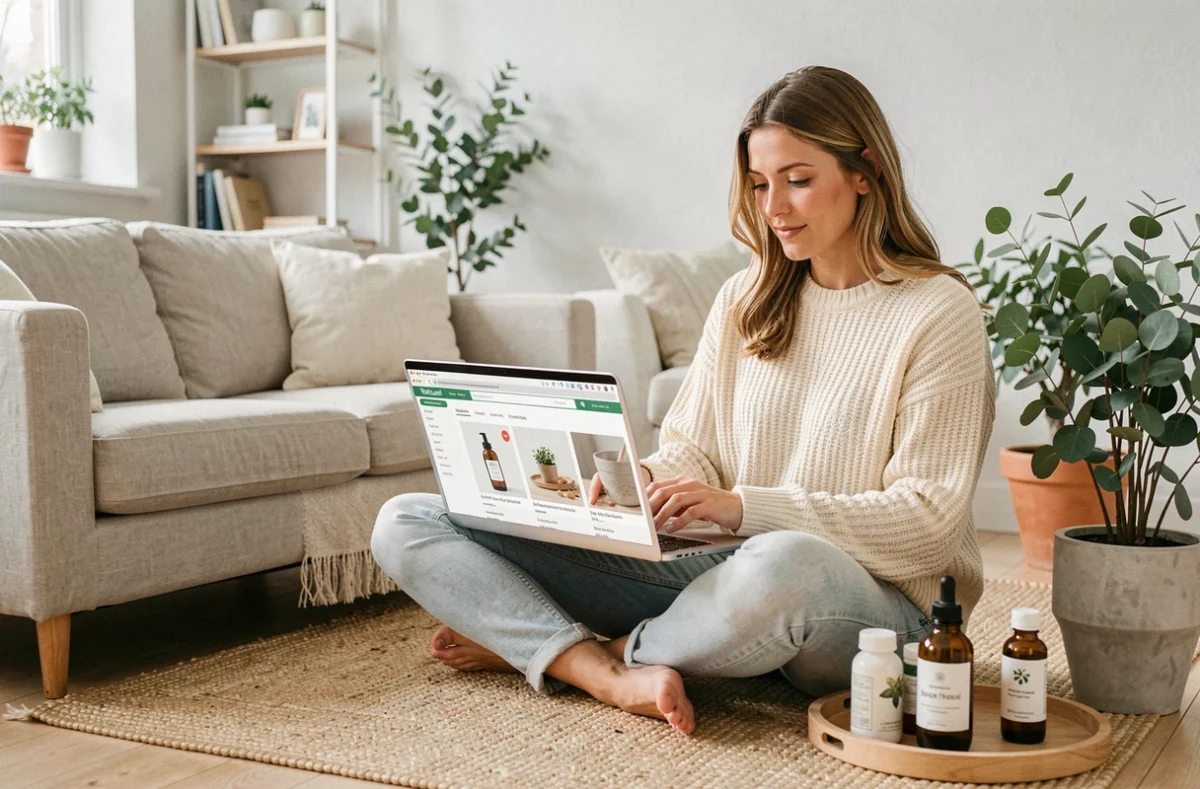
When purchasing a serum or a vegetable oil labeled “natural” from an online store, trust relies almost entirely on the information displayed in the product sheet. However, the European regulatory framework governing these claims is about to change. Directive (EU) 2024/825, applicable from September 27, 2026, imposes new requirements on the presentation of natural products online.
Measuring the gap between current e-commerce practices and what this regulation will require helps to understand what will actually change for buyers of cosmetics and natural beauty products.
Directive (EU) 2024/825: What changes for natural product sheets online
Most online natural product stores currently use terms like “eco-friendly,” “biodegradable,” or “climate-friendly” without a standardized proof requirement. The European directive reverses this logic.
Three concrete changes deserve careful reading.
| Product sheet element | Common practice before September 2026 | Requirement after September 27, 2026 |
|---|---|---|
| “Natural” or “eco-friendly” claim | Freely usable, without mandatory justification | Must be supported by relevant and verifiable evidence |
| Private label (green logo, in-house certification) | Created by the brand itself | Must be based on independent certification or public authority |
| “Carbon neutral” claim | Allowed through the purchase of external carbon credits | Prohibited if based solely on compensation; verifiable reductions over the product lifecycle required |
| Product name, color, visual | No specific regulation | A name, image, or color suggesting an environmental benefit constitutes a claim that must be justified |
This table shows that the burden of proof shifts from the buyer to the seller. Until now, it was up to the consumer to verify whether a product truly deserved its green label. The directive reverses this mechanism for online sales platforms.
For those wishing to access the Zaturelle site and browse a catalog of natural products, this regulatory evolution means that the displayed descriptions will soon need to meet stricter criteria.

Environmental claims in e-commerce: beyond the text
The uniqueness of this directive lies in its scope. It does not only target descriptive texts. A forest green bottle, a leaf illustration, a product line name evoking nature: any visual or semantic element suggesting an environmental benefit falls within its scope.
For online stores, this directly affects the design of product pages. Marketing visuals, promotional banners, and even product line names must be consistent with documented evidence.
What this means for online product searches
Internal search engines of sales sites often filter by categories like “organic,” “natural,” or “eco-friendly.” If these categories no longer correspond to substantiated claims, search filters will need to be revised to remain compliant.
Consumers comparing natural cosmetics online will benefit from a concrete advantage: product sheets will become more reliable as a purchasing decision tool. Conversely, brands that relied on suggestive visual marketing without certification will need to adapt their pages, which could temporarily reduce the number of references displaying green claims.
Carbon credits and delivery: the end of an easy promise
Many e-commerce sites offer “carbon-neutral delivery” or state that their products are “climate-neutral.” This claim generally relies on the purchase of carbon credits, a compensation mechanism external to the production chain.
Promises of carbon neutrality based solely on compensation will be prohibited. A brand of natural products will no longer be able to present an item as “carbon neutral” simply by relying on purchased credits. The claim must correspond to measurable reductions over the product lifecycle.
For online buyers, this changes the interpretation of delivery options. Companies offering green delivery methods will need to document the actual impact, not just display a compensatory logo.
Three criteria to check before buying natural products online
- Does the displayed certification come from an independent organization or a label created by the brand itself? After September 2026, only labels certified by a third party or a public authority will be compliant.
- Are environmental claims (text, visuals, product name) accompanied by accessible documentation? The directive requires evidence that consumers can consult.
- Is the “carbon neutral” claim based on verifiable reductions or on external compensation? The latter option will no longer be acceptable.

Customer data and transparency: what platforms will need to display
Directive (EU) 2024/825 does not directly concern the management of personal data, but it creates a transparency requirement that alters the relationship between sales platforms and their customers.
Information regarding natural products sold online will need to be more detailed. Companies managing e-commerce stores for cosmetics or natural beauty will need to integrate evidence elements into their product sheets, not just commercial arguments.
Product sheets become compliance documents as much as sales tools. For consumers, this means that the quality of information available when purchasing natural products online will approach that required in physical stores, where labeling is already more regulated.
Platforms that invest early in this compliance will have a competitive advantage. Those that delay may need to temporarily remove claims from their catalogs, which will affect the visibility of certain references in search results.
Shopping online for natural products is no longer just about comparing prices or ingredient lists. Starting in September 2026, the reliability of environmental claims will become a measurable differentiation criterion between stores. Regular online buyers of natural cosmetics should familiarize themselves with these new requirements, which will transform how catalogs are constructed and presented.