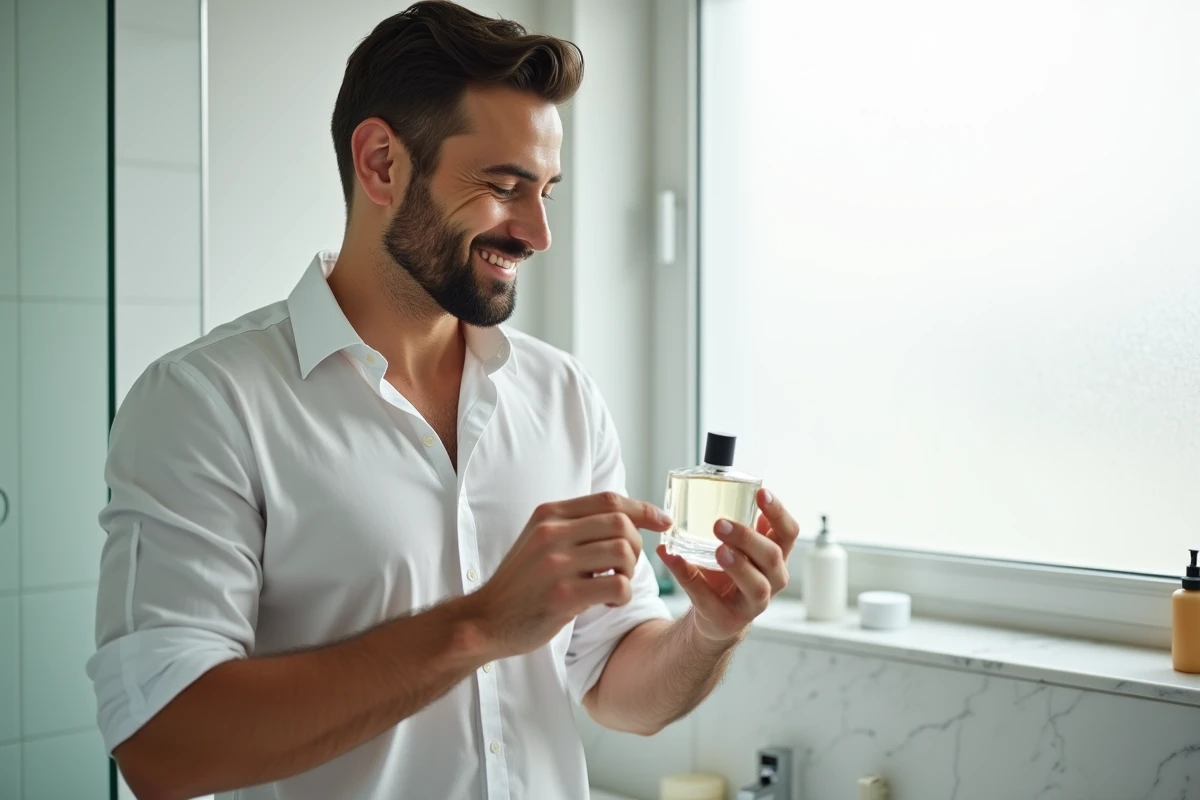
The longevity of an affordable perfume does not depend on the price tag. It relies on three technical parameters that most guides overlook: the actual concentration of fragrant materials, the nature of the base molecules, and the behavior of the formula on skin exposed to body heat for eight to ten hours during the workday.
Concentration and formulation: what separates a long-lasting dupe from one that evaporates
A perfume with a concentration between 15 and 20% remains the most reliable format for achieving long-lasting wear without breaking the bank. Eau de toilettes, even those from well-known houses, rarely exceed 10%. Over a full workday, the difference is clear by the fourth hour.
We observe that concentration alone is not enough. The quality of the formulation weighs just as much, sometimes even more. Two eau de parfums with the same percentage of fragrant materials can offer radically different longevity if one relies on volatile top notes (pure citrus, light aquatic notes) and the other on a base structure built around long-lasting resins or synthetic musks.
Among the men’s dupes at Mes Petites Beautés, several references exploit this logic: a reasonable price combined with eau de parfum concentration and well-crafted base accords for persistence. The result holds up against designer fragrances sold three to four times more expensive.
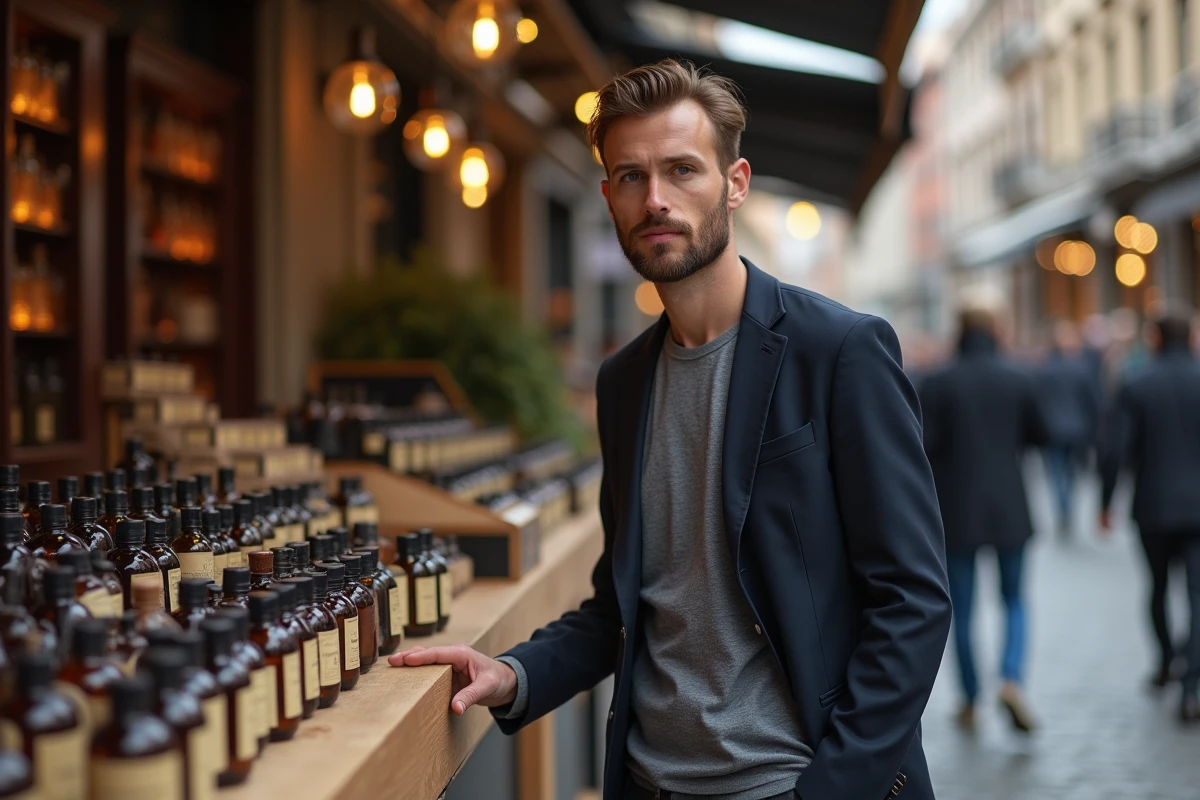
Base notes and office wear: which olfactory families to prioritize
Woody and oriental notes dominate the longevity ranking. Cedar, vetiver, sandalwood, patchouli, amber, vanilla, musk: these materials cling to textile fibers and skin far beyond what citrus or green notes can offer.
In a professional context, projection is as important as longevity. A perfume that lasts ten hours but saturates the open space by the second spray is not a good office choice. We recommend aiming for profiles with moderate sillage but deep longevity, what perfumery refers to as a “persistent skin scent”: perceptible up close, discreet at a distance, still present at the end of the day.
- Woody-musky accords (cedar, white musk, vetiver) provide a subtle professional sillage that does not overwhelm colleagues, with a longevity generally exceeding eight hours on well-hydrated skin.
- Soft orientals (amber, light vanilla, benzoin) work well in cold seasons and provide a warm signature without excessive projection, provided that overdoses of cinnamon or incense are avoided.
- Modern fougères (lavender, coumarin, aromatic notes on a woody base) remain a classic in the male office wardrobe, with decent longevity if the formula includes a resinous or musky base.
Pure fresh families (aquatic, citrus, ozonic) evaporate quickly. They work in summer for a few hours, rarely for an entire day. If you want a fresh opening, choose a perfume whose heart and base compensate with heavier materials.
Affordable dupes and designer fragrances: where the real difference lies
The dupe market relies on reproducing a scent accord using cheaper raw materials or synthetic substitutes. The quality of musks and synthetic woods has improved to the point that the difference between a well-formulated dupe and the original often occurs within the first ten minutes, on the top notes, not the base.
Designers invest heavily in the opening signature, the one that strikes in-store during testing on a blotter. The base, however, often uses the same industrial bases as affordable alternatives. This is a point that classic comparisons rarely address.
What justifies a price gap between dupe and original
The bottle, marketing, and distribution represent a significant portion of the final price of a designer perfume. The juice itself, in a standard-sized bottle, costs only a fraction of the retail price. A dupe eliminates these intermediate layers, which explains price differences of one to four without the olfactory formula being proportionally degraded.
The most convincing affordable scents are those that do not seek to replicate exactly but rather draw free inspiration around a recognizable accord. A dupe that allows for a slight variation on the heart or base can even surpass the original in longevity because it has been formulated to last rather than to impress on a blotter.
Applying an affordable perfume to maximize its longevity in real conditions
The best formula in the world will not last if applied poorly. On dry skin, fragrant molecules evaporate faster. Moisturizing the skin before spraying measurably prolongs longevity. A fragrance-free balm on pulse points (wrists, neck, behind the ears) creates a greasy film that retains base notes.
Spraying on clothing, in addition to the skin, is an underestimated technique. Textile fibers (wool, cotton, cashmere) hold fragrant molecules much longer than the epidermis. A spray on the collar of a shirt or the inside of a jacket is enough to extend the perception of the sillage for several hours.
- Apply on clean, hydrated skin, never on dry skin or just after a hot shower that opens the pores and accelerates evaporation.
- Do not rub the wrists together: friction breaks the top molecules and alters the olfactory pyramid.
- Keep the bottle away from light and heat to preserve the stability of the formulation over time.
A well-chosen dupe, applied correctly, remains perceptible at the end of the workday. The combination of an eau de parfum concentration, a woody or amber base, and application on hydrated skin and textiles is the most reliable method to achieve credible longevity without exceeding a reasonable budget.