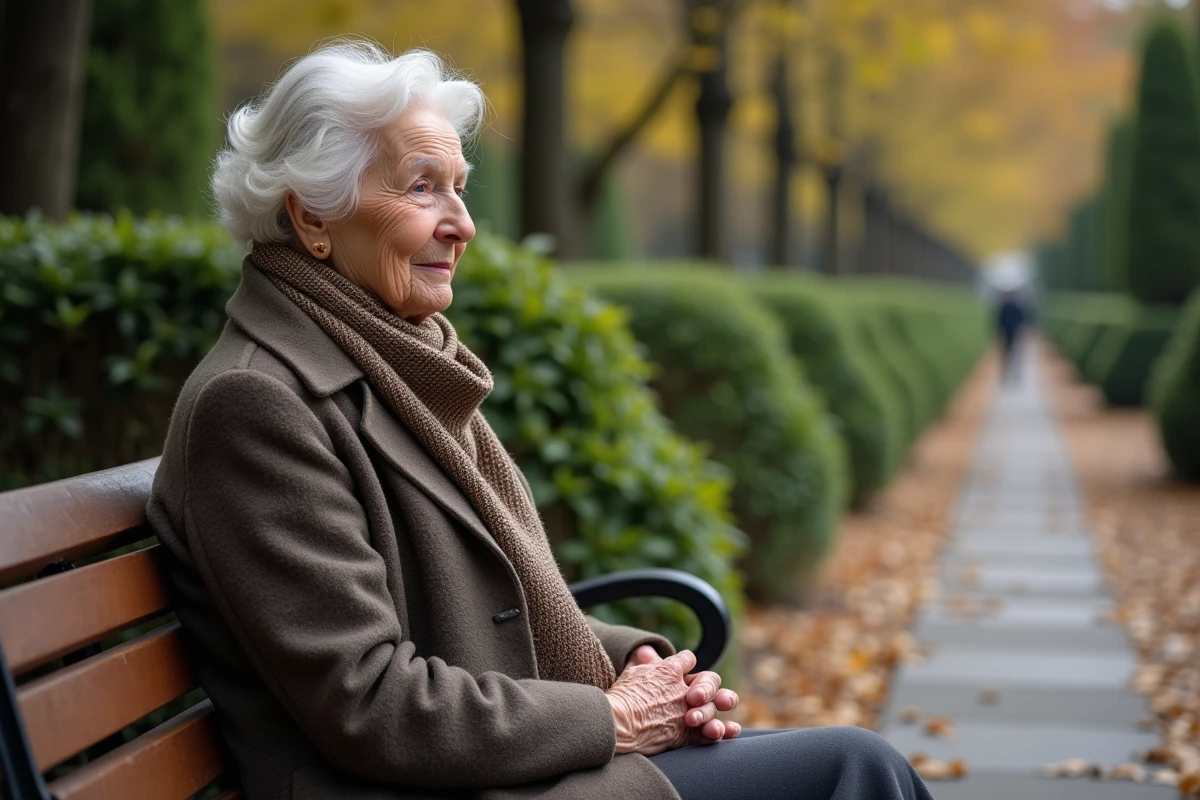
800,000. This is not the figure of an average city, but the number of French people who are celebrating their 90th birthday or more in 2023. Eight times more than in 1950. This population is exploding, driven by increased life expectancy and the vast demographic movement reshaping the country.
Women overwhelmingly dominate this age group: nearly 80% of nonagenarians are women, a sign of a longevity gap that is not closing. Insee confirms it: this wave of older individuals will continue to grow, calling for major political and social choices.
The milestone of 90 years in France: a demographic reality in full expansion
The increase in the number of French people reaching 90 years old is far from anecdotal. In 2023, metropolitan France counts nearly 1.1 million people aged 90 and over, which is an eightfold increase over seven decades. And the trend is not reversing. The face of very old age is female: 80% of those aged 90 and over are women. This is a direct consequence of the record female life expectancy among European countries, a gap that remains wide between the sexes.
The age distribution is undergoing profound changes. In 2023, 21% of the French population is over 65, compared to only 10% in 1980. By 2050, this will rise to 27% if Insee’s projections hold true. Another signal: the baby boomer generation is massively crossing the 75-year threshold, accelerating the progression of advanced ages. Some rural areas and departments, from the Massif Central to Brittany, are seeing their share of nonagenarians rise above the national average, revealing real territorial disparities.
The number of people aged 90 in France illustrates a profound transformation of the age pyramid. France, the second most populous country in the European Union, combines a still dynamic birth rate with accelerated aging. This evolution disrupts intergenerational solidarity, health policies, and support for dependency. By 2070, more than 11 million French people will have crossed the age of 75: the map of aging is thickening and the challenges are becoming clearer.
How many French people are currently living beyond 90 years? Key figures to know
In 2023, 1.1 million French people have surpassed 90 years, according to the latest data. This wave of nonagenarians continues to grow, driven by rising life expectancy and medical advances that are continually pushing back the boundaries of old age. The phenomenon, already massive, remains heavily marked by feminization: 80% of those aged 90 and over are women, a direct consequence of the life expectancy differential.
On a European scale, France stands out: it shows 22.2% of its population over 65, while the EU average reaches 21.6%. Among those over 90, isolation particularly affects women: about 300,000 of them live alone, most having outlived their partners.
But longevity does not stop there: more than 30,000 French people are centenarians in 2023, proof that aging continues. Rural areas or certain departments like Brittany, Gers, or Lozère see the proportion of those over 90 exceed the national average.
The dynamics do not slow down. With the massive arrival of baby boomers into old age, Insee predicts 1.5 million nonagenarians by 2025, and nearly 11.2 million people aged 75 and over by 2070.
In the face of this demographic shift, French society is entering a phase of profound transformation. The question is no longer whether France is aging, but how it organizes itself to support this unprecedented reality.

Aging in France: what challenges does society face with the rise of nonagenarians?
The rapid increase in the number of nonagenarians is reshaping the balance of solidarities and the social contract in France. Crossing the million mark of people aged 90 and over in 2023 marks the beginning of a new collective era. Aging immediately impacts the financing of pensions and public spending: over 14% of GDP is already used to finance pensions, while the ratio of workers to retirees is plunging to 2.5 by 2026, compared to 3.6 twenty years ago.
Dependency is becoming a concrete and immediate issue. After 90, the loss of autonomy affects a large part of the population: 44% of those aged 90-94 and 74% of those aged 95 and over receive the APA (personalized autonomy allowance). Nearly 41% of people aged 95 and over live in nursing homes. Female precariousness is increasing: women, who are overwhelmingly present in old age, are more exposed to loneliness and receive pensions that are 41% lower than those of men. Many live alone, sometimes in difficult conditions.
The health system must confront the rise of chronic diseases and fragility related to aging. While medicine extends life, it raises the question of the quality of this additional life: prevention, support, and home care become priorities. Public policies now have the responsibility to strengthen solidarity, support autonomy, and guarantee the dignity of the elderly.
To better grasp the scale of the phenomenon, here are some key figures:
- 1.1 million nonagenarians in 2023 according to Insee
- 14 million people aged 65 and over
- More than a million seniors below the poverty line
France is facing the mirror of its own longevity. The future rests on the collective ability to invent new balances in the face of this silent revolution.