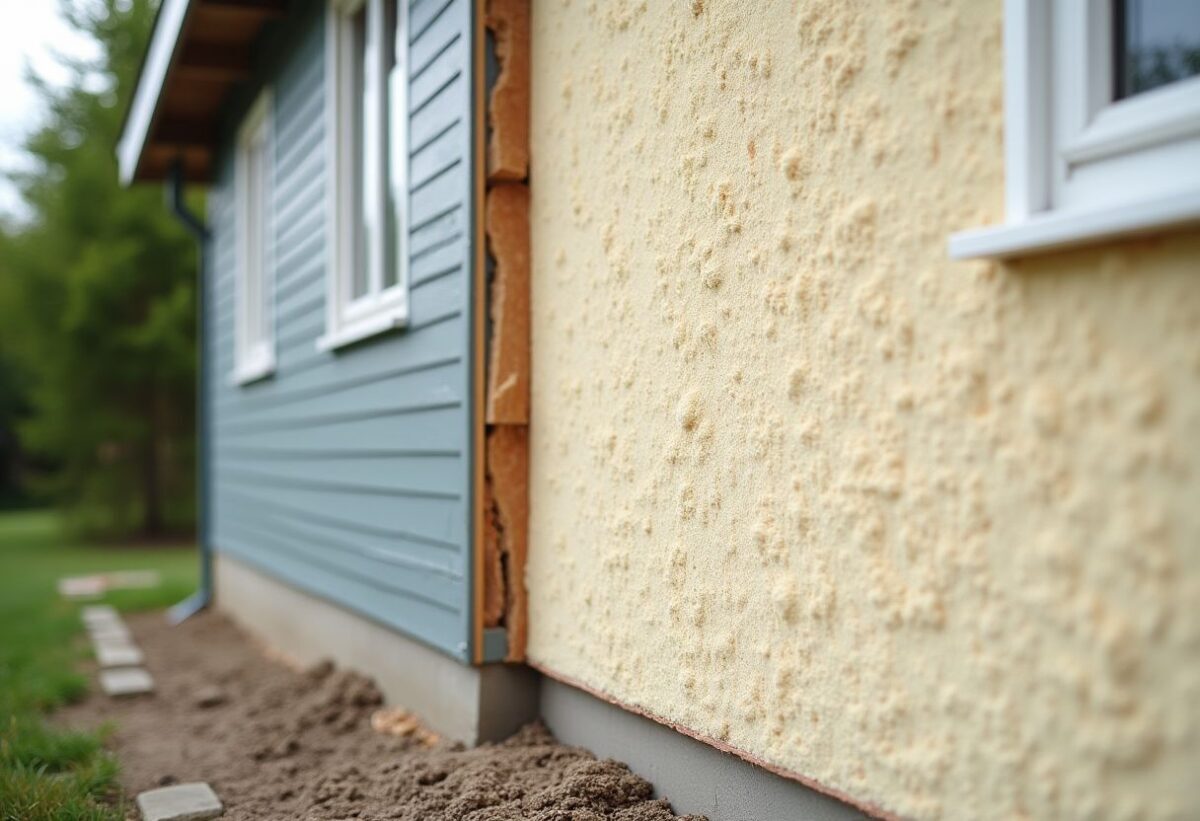
In the face of current environmental challenges and the continuous rise in energy costs, it becomes imperative to turn towards more sustainable and economical solutions to protect one’s habitat. Among the various methods for improving thermal efficiency, external insulation stands out for its numerous advantages. This thermal insulation technique, which involves wrapping a building with a layer of insulating materials, not only enhances indoor thermal comfort but also reduces heating and cooling needs. Offering significant potential for reducing energy expenses, it also contributes to environmental preservation while increasing the value of your property.
Why choose external insulation?
Adopting external insulation for your home has many benefits. Here are a few that deserve special attention.
Increased energy efficiency: This type of insulation effectively addresses thermal bridges, thereby reducing heat loss. By maintaining a constant temperature indoors, it provides unparalleled thermal comfort in all seasons. Additionally, a well-insulated home consumes less energy, resulting in a significant decrease in heating bills.
Preservation of indoor space: Unlike interior insulation, this method does not reduce the living area. All work takes place outside the building, leaving internal volumes and spaces intact. This is particularly advantageous in small homes where every square meter counts.
Protection of the structure: By directly protecting the exterior walls from climate variations and bad weather, this insulation extends the lifespan of the building’s structure while enhancing its aesthetic appearance. It also allows for the renovation of the facade with a wide choice of finishes and materials.
The different types of materials used
When considering the implementation of external insulation, the choice of materials is a crucial step to ensure optimal performance.
- Expanded polystyrene (EPS): Lightweight and economical, it is one of the most commonly used materials in external insulation. It offers a good quality-price ratio and satisfactory thermal efficiency.
- Rock wool: Providing excellent thermal and acoustic insulation, it is also non-combustible, making it a safe choice for buildings.
- Wood fiber: Known for its ecological properties, wood fiber is perfect for those seeking a natural solution while ensuring good thermal inertia.
- Vacuum insulation panels (VIP): Although costly, these panels offer exceptional insulation performance and are increasingly favored in ambitious renovation projects.
The implementation steps
Undertaking an external insulation project requires addressing each step meticulously to ensure maximum effectiveness.
A preliminary analysis of the facade is essential to identify the building’s specific characteristics and the most suitable insulation solutions. Working with an experienced professional ensures that the specifics of your home are taken into account.
Once the materials are chosen, the work can begin with the installation of the insulation, followed by the application of a protective coating. This phase requires particular attention to avoid thermal bridges. Finally, an aesthetic finish can be added to harmonize the appearance of the house with its environment.
Financial incentives and subsidies
To encourage the adoption of sustainable energy practices, numerous financial aids are available to homeowners wishing to carry out external insulation work.
- Tax credit for energy transition (CITE): It allows you to deduct part of the expenses incurred for insulation from your taxes.
- Zero-interest eco-loan (eco-PTZ): This interest-free loan helps finance energy renovation work, including external insulation.
- Energy bonus: Distributed by energy suppliers, this bonus encourages energy renovation work and can be combined with other aids.
- Local subsidies: Some local communities offer specific aids, so do not hesitate to inquire at your town hall.