On the sets of TF1’s news broadcasts, every clothing detail is scrutinized by millions of viewers. The question of who chooses the outfits for the presenters comes up regularly, without a clear answer ever being publicly formulated. The topic remains largely taboo within newsrooms, between discreet arrangements with brands and rarely documented internal guidelines.
Clothing Loans and Showcase Logic: An Old System in French Television
The historical functioning of the television wardrobe relies on a tacit agreement between presenters and suppliers. According to testimonies collected by the Guichet du Savoir (Municipal Library of Lyon), female presenters once had a budget line integrated into their salary, representing a modest fraction of their remuneration, insufficient to access major fashion houses.
The loan system then became the norm. Wholesalers or tailors would contact journalists directly to offer them pieces, loaned for about fifteen days. The presenter would wear the garment once or twice on air, then return it. Her only obligation: to inform the supplier of the day of airing. In exchange, the store would display a signed photo and could claim to dress this or that figure from the small screen.
This mechanism imposed a strict constraint: no visible brand could appear on air. The channel did not intervene directly in these negotiations but imposed this rule of commercial invisibility. The mention “dressed by…” or “styled by…” often appears in the credits, the only official trace of these partnerships. To understand in detail who dresses TF1’s journalists, one must go back to this loan mechanism that continues in updated forms.
Outfits and Editorial Line on TF1: A Closer Link Than It Seems
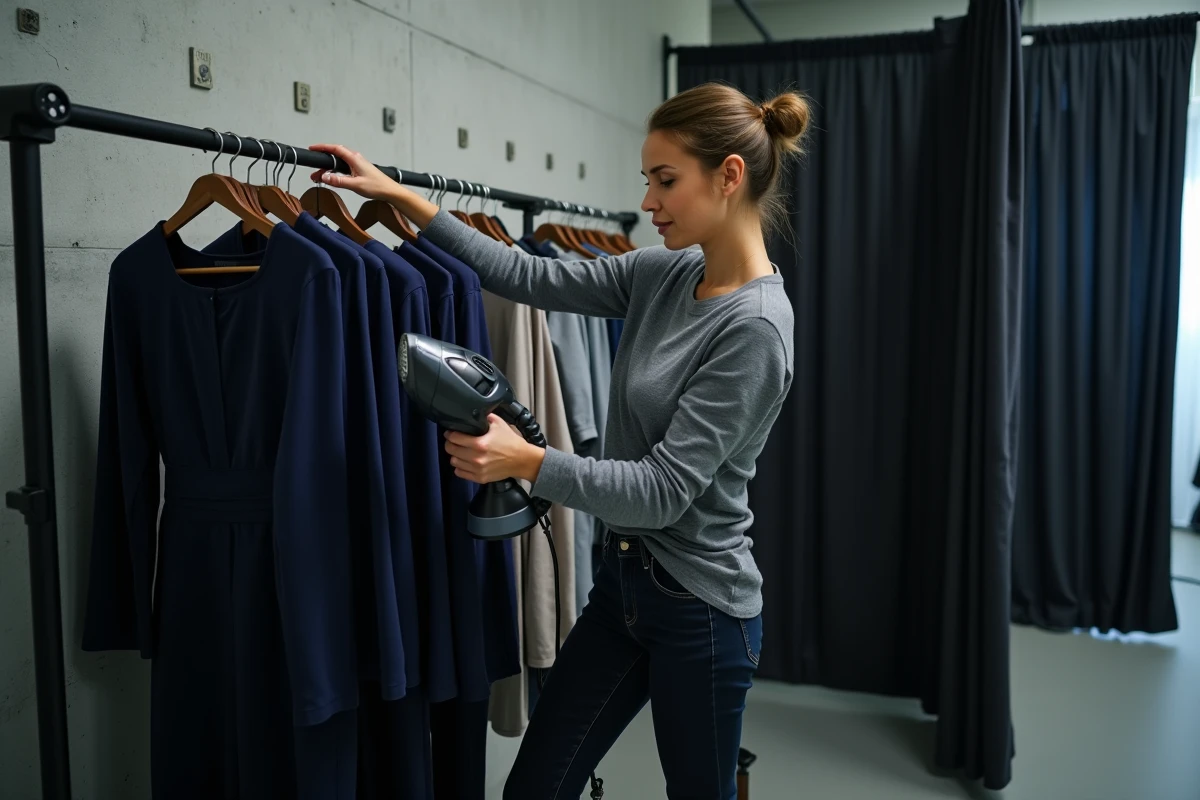
The clothing choice of a news presenter is not just a matter of personal taste. Marie-Sophie Lacarrau, former presenter of TF1’s 1 PM news, publicly explained that she adapted her outfits according to the nature of the news covered in that day’s edition.
This testimony reveals an editorial dimension of clothing that is rarely addressed. During serious news events (terrorist attacks, natural disasters, major political announcements), bright colors or flashy patterns are avoided in favor of sober tones. Conversely, a summer edition or a light topic allows for more whimsy.
Clothing becomes an editorial signal addressed to the viewer, even before the summary is announced. This logic goes beyond simple image consulting. It involves a form of coordination between the editorial team, which defines the tone of the news, and the presenter, who adjusts her outfit accordingly.
The available data does not allow for a definitive conclusion on whether this coordination is guided by formal instructions or a form of self-regulation acquired through experience. Field feedback varies on this point: some journalists claim total freedom in their clothing choices, while others mention more or less strong recommendations from their management.
Weather and Special Editions: Distinct Clothing Codes on the Channel
The style on air is not only about news presenters. TF1’s weather presenters follow their own clothing logic, sometimes differing according to the editions.
Ange Noiret, weather presenter on TF1, publicly clarified his on-air style, mentioning a change in look that many viewers had requested. This type of statement shows that the public exerts direct pressure on the clothing choices of on-air figures, beyond any internal guidelines.
Guidelines also differ according to the time slot. A morning weather bulletin, inserted into a relaxed morning show like “Bonjour! La matinale TF1” hosted by Bruce Toussaint, does not call for the same clothing style as a 8 PM bulletin. The morning show adopts a more accessible style, while the evening edition maintains more formal codes.
- The morning weather bulletin allows for bright colors and casual cuts, in line with the conversational tone of the show
- The 1 PM edition adopts an intermediate style, where sobriety adjusts to the day’s news
- The 8 PM bulletin imposes a stricter style, with neutral tones and classic cuts that enhance the perceived credibility of the news
Stylists, Image Consultants, and Internal Decision Chain
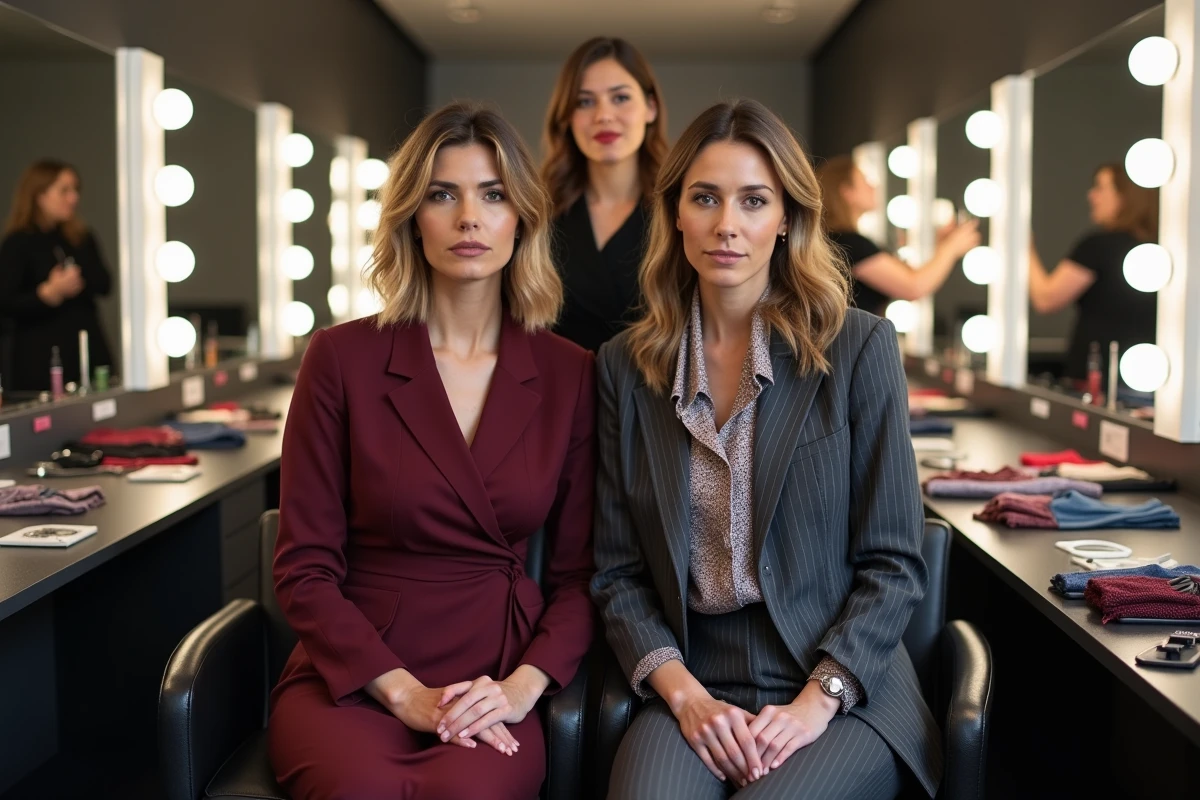
The question of the precise identity of the people who dress journalists remains the most opaque. The behind-the-scenes of news at TF1 involves a collective decision-making chain, with roles distributed among the editorial team, management, and presentation. Clothing styling is part of this organization, without a single “in-house stylist” position being officially documented.
Some French brands have specialized in dressing media personalities. The house 17h10, for example, showcases collaborations with television figures on its social media, without the contractual details of these partnerships being made public. Loaning remains the dominant model, but it coexists with personal purchases and, for some presenters, the use of independent stylists paid out of their own pockets.
The increase in competing channels and social media has changed the game. Presenters are now photographed, commented on, and compared in real time. This increased exposure heightens the pressure for clothing coherence, but also for originality. A presenter wearing the same jacket two days in a row will be noticed, just as will one whose style is deemed too out of line with their channel’s codes.
- Major channels do not communicate about the existence of dedicated clothing budgets for presenters
- The use of personal stylists seems more frequent among evening edition presenters, who are more exposed
- Social media have turned viewers into permanent fashion critics, indirectly influencing clothing choices
The wardrobe of TF1 journalists remains a territory where the channel’s brand image, editorial sensitivity, and each presenter’s personal strategy intersect. No written rule has ever been made public by the TF1 group on this subject. Between designer loans, adjustments related to current events, and the growing pressure from social media, on-air dressing functions as an unspoken code, transmitted more by usage than by regulation.