When the burner of a boiler stubbornly refuses to ignite, it can quickly turn a comfortable home into a chilly interior. Among the potential culprits, the thermocouple often stands out. This essential part acts as a bodyguard, ensuring the safety of the system by checking for the presence of the flame. If the thermocouple is faulty or misadjusted, it can cut off the gas, preventing the burner from igniting. A thorough understanding of its operation and its interactions with other components of the boiler is fundamental to solving this thermal puzzle.
Diagnosis and solutions for a faulty boiler burner
When faced with a boiler burner that won’t ignite, the first step is to identify the problem. The pilot light, that small tenacious flame, should, in principle, ignite the gas burner. If the pilot light is out, one must question the cause: a simple draft or a deeper issue? The thermocouple, for its part, must generate sufficient electrical current to activate the electromagnet, guardian of the gas valve. An extinguished pilot light or a faulty thermocouple are obstacles to this delicate process.
In the scenario where the pilot light is active but the burner remains inert, scrutinize the thermocouple. A worn or misaligned thermocouple may not detect the heat from the pilot light, leading to the closure of the gas valve and depriving the burner of the fuel necessary for ignition. Replacing or readjusting the thermocouple may be necessary. Check the condition of the electromagnet: a failure of this component can prevent the gas valve from staying open, even if the thermocouple is functioning correctly.
For those facing the riddle of a recalcitrant boiler, discover why your boiler won’t ignite the burner by examining these interdependent mechanisms. A thorough investigation of the pilot light, thermocouple, electromagnet, and gas valve will often reveal the flaw. In this technical context where every component matters, consulting a qualified professional is advisable to ensure accurate analysis and safe repair. Technical expertise becomes, here, the best ally of a reliable and sustainable heating system.
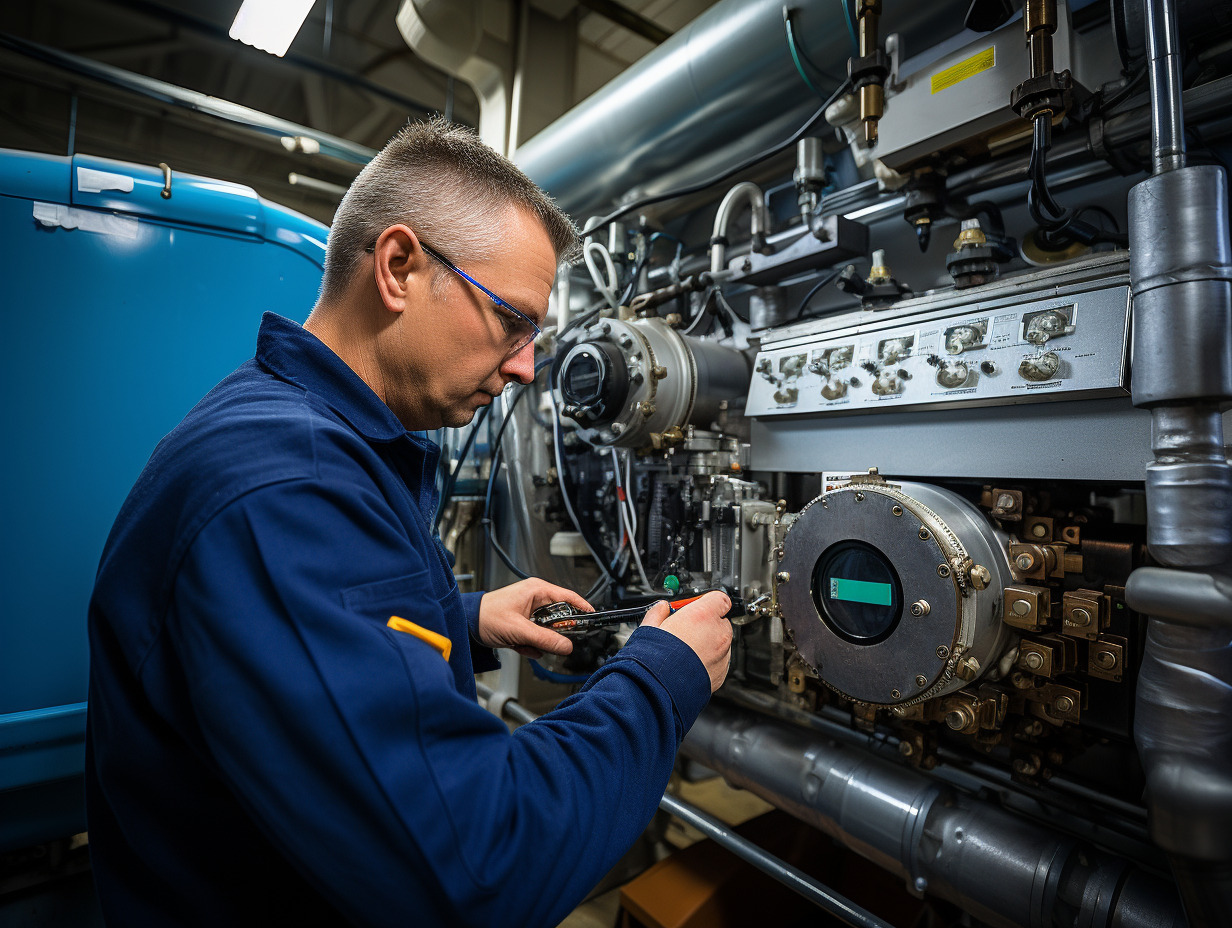
Maintenance and precautions to ensure the proper functioning of the thermocouple
Regular maintenance is key to preserving the functionality of your boiler’s thermocouple. The thermocouple, this cross-shaped safety sensor, is effective only if the pilot light, its source of heat, burns with a constant and stable flame. Ensure that the pilot tube, which directs gas to this pilot light, is free of obstructions and that the flame is blue, an undeniable sign of adequate combustion.
The gas flow set by the pilot injector deserves special attention. An incorrect flow, either too low or too high, can lead to the extinguishing of the pilot light or malfunction of the thermocouple. Therefore, examine this component and, if necessary, clean or replace it to ensure optimal gas supply.
Proceed with caution when inspecting and cleaning the thermocouple and its related components. Improper handling can damage the magnetic tip or misalign the sensor, compromising its ability to generate the current necessary to open the gas valve. To avoid these risks, prioritize the intervention of a professional.
Ultimately, do not let negligence creep into the maintenance of your boiler. A well-adjusted pilot light and a functional thermocouple are guarantees of a reliable gas boiler. Vigilance is essential, and periodic maintenance by a qualified technician is highly recommended to maintain the efficiency and safety of your central heating appliance.